THE GREAT CONE CONTROVERSY

"TO CONE OR NOT TO CONE?"


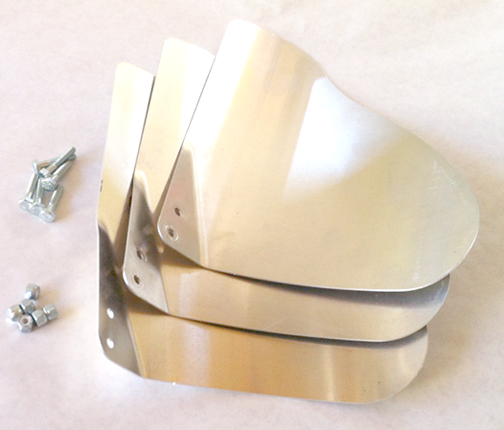
After spending over $18,000.00 in molds, castings, jigs, brackets, tooling and 300 hours of testing labor we can't justify trying to sell you a cone for the center of your wind turbine hub!
 
WHY! Believe it or not cones actually CUT Wattage output by .87% (Almost a full 1%)
 
The results where NOT what we had expected!
In fact, during the first week of testing we thought we where all losing our minds so then we went out and bought a whole new set of voltage and amperage meters just to make sure our equipment was not malfunctioning. After determining that a CONE KILLED POWER we THEN had to explain the loss! (Having fun yet?)
 
This was an unexpected twist for what had initially been anticipated as an exciting new product addition that we hoped would INCREASE power!
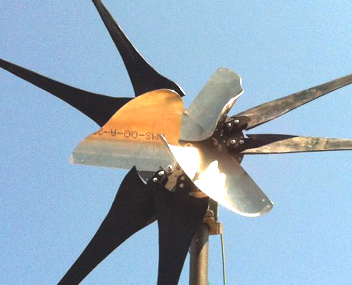
The idea of a cone was to redirect all of the wasted air that was blowing into the center of the hub area thereby gaining extra thrust,,,,,,,,,,,, well that's NOT what happened in the real world! The cone produced more drag than power!! The cone has about 224 square inches of surface area and it would seem that the spinning of this large surface actually robbed power in the final analysis!!
 

HOW????

 
"Surface Drag",,, This is not what we had expected to discover when we started this project.
 
Cones do indeed add that nice modern look, giving wind turbines that exquisite space-aged guise.
However in the final analysis cones actually just added extra cost, weight and a bit of lost power too!
 
In the final ratiocination it would seem that at "wind turbine speeds" cones are at best a beautification item,,, at best!
 
Perhaps at higher speeds cones could be useful. For instance jet engines benefit from centered turbine cones BUT having a cone on a wind turbine is a losing proposition since at our company keeping performance high while keeping costs down is job ONE!!! A cone is therefore not a justifiable component for our wind turbines.
While this investigational chapter required exploration and I am glad to say that our cone research annals are closed!
On to more important research!
 
Sorry but that's the honest truth and this is a true story. In all honesty after 20 years of turbine building I would have to say that logic has failed more often then not. You just have to build it and test, test, TEST until it works! That type of ideology has always worked best for our company,,, hard work, research, testing and logging the positive results!!!
 
I wish only the best of luck to our loyal customers and other wind turbine tinkerers and enthusiasts!
I hope this info helps you save some time and money.


More, Hub-Bub
 
 
In a wind storm you should allow your blades spin free and very fast so centrifugal force can hold them outwards. Never try to short the wires and try to stop PMA from turning in storms as this could damage your stator coil and the blades!! If the hub metal bends backwards towards the POLE it could hit!! It is best to let these turbines just do their job in high wind weather.
 
HOW CAN SPINNING HELP KEEP THE HUB STRAIGHT?
It is called centrifugal force,,, A self straightening effect of any FAST SPINNING object.
 
 
TEST: We took a hub and bent it way back almost 4 degrees (just about hitting the pole) on all 6 blade points and guess what happened in testing. After a strong wind it was pulled back into its preferred shape! The hub bent itself back out to only a 1.1 degree back pitch angle.
 
 
Centrifugal force = Self straightening outward force!
 
Fast spinning blades are self straightening and self protecting
and thus and can't bend backwards in stormy weather !!
 
 
SO,, allow your blades to spin freely during storms IF you missed your chance to lower your tower.


Hit 2729023-Times
 
 
b3090878.crawl.yahoo.net